

Infant babysitter | Mexico & LATAM | Specialized newborn to 18-month-old care
Choosing an infant babysitter is entrusting your newborn or baby to a professional who understands the unique physiological, emotional, and developmental needs of the first 18 months of life.
From the moment your baby arrives, everything feels delicate. Sleep patterns are fragile. Feeding routines require precision. Hygiene and sterilization matter deeply. You are not just looking for help. You are looking for expertise, calm, and consistency.
Our infant babysitters specialize in newborn and infant care from birth through 18 months. Many have training in nursing, early childhood development, or infant care programs. They understand newborn reflexes, feeding cues, safe sleep practices, sterilization protocols, and early stimulation aligned with developmental milestones.
This is long-term or structured part-time support designed to integrate into your home rhythm. Our infant caregivers provide stability during one of the most important stages of your child’s life.
At Totters Care, infant care and in-home nanny services are not casual babysitting. It is professional, attentive, developmentally informed support delivered with structure and emotional awareness.
What is an infant babysitter for families in Mexico and Latin American countries?
An infant babysitter provides structured, emotionally attuned, and developmentally appropriate care for babies from newborn to 18 months old, directly in your home, hotel, or temporary residence in Mexico or Latin America.
This service focuses on maintaining safe feeding routines, proper bottle preparation and sterilization, safe sleep practices, hygiene protocols, and early developmental stimulation, while supporting secure attachment and emotional regulation during your baby’s most sensitive stage. It is especially valuable for busy expats, relocating parents, intended parents after surrogacy, traveling families, and conscious, responsible parents who want professional, reliable support rather than informal care.
Infant care is not simply supervision; it is intentional, structured support designed to bring safety, consistency, and peace of mind during a time when routine and trust matter most.
The most common concerns parents have when hiring an infant babysitter in Mexico and Latin America
When you begin searching for an infant babysitter in Mexico or Latin America, the decision feels especially sensitive. You are not only choosing someone to care for your newborn, but doing so in a country with different childcare norms, safety standards, and hiring practices.
You may be experiencing:
- Concern about safety and screening standards. You may feel surprised by how informal childcare can be in parts of Mexico and Latin America. You might have already experienced high turnover, caregivers who stop responding, do not show up, leave without notice, or fail to follow basic hygiene protocols. You may feel unsure about what is truly considered professional. Background checks, references, clear agreements, and strict hygiene standards may not always be the norm. This lack of structure can feel unsettling when your baby is involved.
- Uncertainty about newborn expertise. Not every babysitter understands newborn care. You want someone who truly knows feeding schedules, safe sleep practices, sterilization procedures, and early developmental milestones. You do not want someone learning on the job with your baby.
- Anxiety about hygiene and sterilization. With newborns and infants up to 18 months, sterilizing bottles, managing breast milk storage, preventing infections, and even avoiding heavy perfumes or strong scents matter. You want clear protocols, not improvisation.
- Sleep exhaustion and the need for structured support. You may be searching during a period of deep sleep deprivation. You might need consistent daytime care, long-term structured support, or even a night nurse to restore stability in your home.
- Difficulty finding reliable availability. You may have struggled to find someone who can commit to the hours you actually need. Frequent schedule changes, last-minute cancellations, or constant adjustments with previous caregivers may have left you feeling frustrated and unsupported.
- Language and communication concerns. You may want to prioritize English communication or bilingual continuity during your baby’s first year. Clear communication builds trust and reduces anxiety.
- Confusion around routines. Establishing feeding schedules, pumping coordination, milk storage, sleep rhythms, and early stimulation can feel overwhelming without experienced guidance.
- Balancing return to work and bonding. If you are preparing to return to work, you are worried about finding a structured part-time or long-term support for your baby without disrupting attachment and emotional security.
How do you know you need a professional infant babysitter?
You are tired. You are protective. You are trying to do everything right during one of the most delicate stages of your baby’s life.
You may recognize yourself here:
- You are physically exhausted and sleep-deprived.
- You feel anxious about leaving your newborn with just anyone. Trust is not negotiable.
- You want someone with real experience in newborn care, not someone improvising.
- You are returning to work, but do not want to disrupt attachment.
- You want professional care that supports bonding, routine, and emotional stability.
- You need help establishing sleep and feeding rhythms.
- You want peace of mind, not to provide constant micro-management.
What does Totters’ infant babysitter service include?
- Bottle sterilization and feeding protocols. Safe preparation and sterilization of bottles and feeding equipment, following structured hygiene standards to protect your baby’s health.
- Breastfeeding support. Assistance bringing the baby to the mother for nursing, supporting comfortable positioning, managing pumping schedules, and ensuring proper milk storage.
- Breast milk organization and milk bank management. Structured labeling, storage rotation, and organization of expressed milk to maintain safety and efficiency.
- Sleep routine development. Gentle support in establishing healthy sleep rhythms aligned with your baby’s developmental stage, including nap tracking and nighttime transitions.
- Night nurse coordination when needed. For families requiring overnight support, we coordinate with or provide night nurse services to ensure continuity in care and structured rest routines.
- Safe bathing and hygiene. Infant bathing, skin care, diapering, and hygiene practices aligned with newborn safety standards.
- Early stimulation and developmental support. Age-appropriate sensory stimulation, tummy time guidance, motor skill support, and responsive interaction that encourages healthy cognitive and emotional development.
- Milestone tracking. Observation and communication of developmental progress, including motor, social, and language milestones.
- Infant laundry and nursery organization. Washing, organizing, and maintaining your baby’s clothing, linens, and nursery essentials with structured attention to hygiene.
- Long-term continuity of care. Available as long-term or structured part-time support, providing stability during the first 18 months when consistency is essential.
How are infant caregivers selected, vetted, and matched to your needs in Mexico and Latin America?
Inviting someone to care for your newborn requires absolute trust. In Mexico and Latin America, where childcare standards can vary widely, structure and verification matter even more. You deserve clarity, professionalism, and consistency from the very beginning. Every Totters infant caregiver undergoes a rigorous, structured selection process.
- Specialized infant background. Our caregivers either have formal training in nursing, infant care, or pediatric care, or they bring extensive hands-on experience caring for newborns and infants. Many have experience with newborns and understand feeding protocols, safe sleep practices, sterilization standards, and early developmental milestones.
- Comprehensive screening. Every caregiver completes background checks, reference verification, and in-depth interviews. We evaluate reliability, emotional maturity, communication skills, and real-life judgment, not just past job titles.
- Structured professional evaluation. Each candidate completes a validated assessment designed to measure integrity, emotional stability, and professional responsibility. We rely on structured evaluation systems, not intuition alone.
- Infant first aid and emergency certification. All caregivers are certified in infant first aid and emergency response, ensuring preparedness in unexpected situations.
- Matching and the after-matching process are just as intentional as selection.
- Discovery video call and detailed questionnaire. We begin by understanding your baby’s routines, feeding patterns, sleep rhythms, language preferences, and your parents' expectations.
- Intentional compatibility matching. Based on your needs, we identify the caregiver whose temperament, experience, and working style best align with your home.
- Personal interview before placement. You meet and interview your selected caregiver before care begins, ensuring clarity and comfort.
- Guided adaptation and ongoing oversight. Once support starts, we implement a structured adaptation period and provide continuous oversight. If alignment is not achieved, a rematch option is available.
You are supported by a structured system designed to protect your baby’s safety, routine, and early development during the most delicate stage of life.

Hello! I am Montse Armesto
Creative Educator & Pedagogue specialized in Child Neuropsychology, with a diploma in Positive & Gentle Parenting.
Start now with comprehensive full-time childcare coverage with elevated support
Includes:
- 40 hours per week of in-home care
- Fixed weekly schedule based on your family’s needs
- Tailored family-matching process
- Fully vetted and certified childcare Totter
- Childcare Totter certified in first-aid
- Backup support if your childcare Totter becomes sick or needs to be absent
- Active and ongoing support from the Totters team
- Personalized developmental plan with early stimulation and educational, recreational, and play-based activities
- Integrated child-focused care, including basic meal preparation for your child and cleaning of child-related items
Minimum commitment: 6 months (24 weeks)
Preferred family benefit: Special discount available on 12-month commitments (48 weeks)
Pricing
$2,235 USD per month with a bilingual English-Spanish speaking childcare Totter
$1,470 USD per month with a Spanish-speaking childcare Totter
*Custom plans are available.
How it works?

Step 1: In depth family assessment and needs mapping
We begin with a detailed consultation to understand your family’s values, routines, expectations, and your child’s emotional and developmental needs.

Step 2: Careful selection and matching with your Totter teacher or caregiver
We hand select and evaluate professionals through interviews, background checks, skill assessments, and emotional competency screening to ensure the right fit for your home.

Step 3: Ongoing support, monitoring, and continuity of your service
Once we begin, we provide continuous guidance, structured follow-ups, backup planning, and ongoing communication to maintain consistency and long-term stability.
Tips and resources for adjusting to infant care in Mexico and Latin America
Caring for a newborn in a new country adds another layer of responsibility. Small adjustments can help you feel more confident and supported as you navigate infant care in Mexico or Latin America. Here are practical ways to ease the transition:
- Clarify hygiene standards from the beginning. Communicate clearly about bottle sterilization, milk storage, handwashing routines, and scent-free policies. In some regions, hygiene expectations may differ from what you are used to. Being explicit prevents misunderstandings.
- Establish written feeding and sleep routines. Newborn care requires precision. Providing a written outline of feeding intervals, pumping schedules, safe sleep practices, and soothing methods creates consistency and reduces anxiety.
- Discuss fragrance and product preferences. Many parents prefer that caregivers avoid heavy perfumes or scented lotions. Clarifying this early ensures your baby’s comfort and safety.
- Plan for sleep support if needed. If sleep deprivation becomes overwhelming, consider structured overnight support or a night nurse. Even temporary night assistance can restore balance.
- Secure bilingual communication is important to you. If English continuity matters during your baby’s first year, ensure expectations are clear from the start.
- Build local pediatric connections. Identify pediatricians, emergency clinics, and nearby pharmacies early. Knowing where to go reduces stress in unexpected situations.
- Trust structure over improvisation. In Mexico and Latin America, informal childcare is common. Choosing a structured, agency-backed infant caregiver provides added stability during your baby’s most delicate stage.
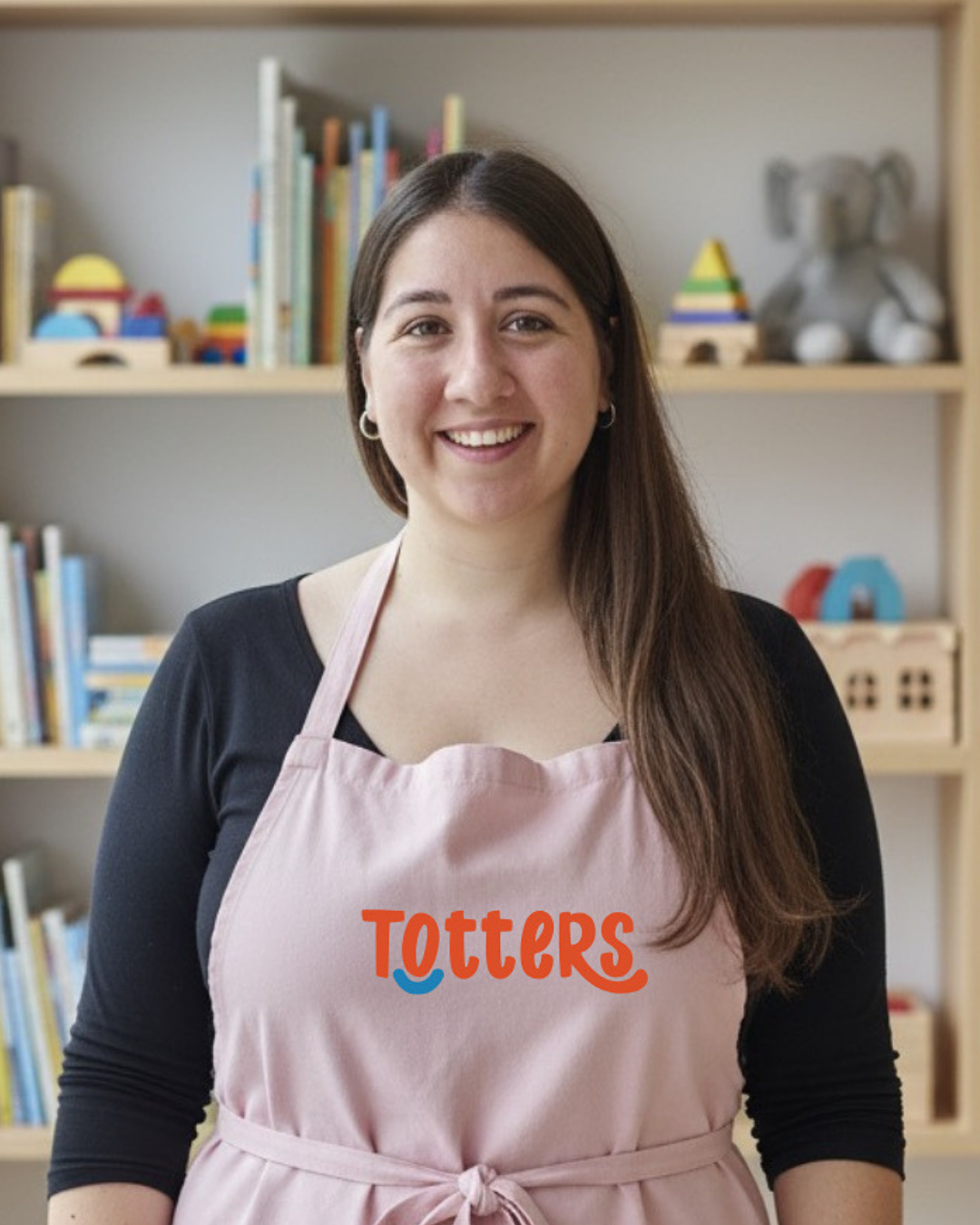
Hello, I’m Montse Armesto, founder of Totters Care. We provide specialized infant care in Mexico and Latin America
I am a pedagogue and child neuropsychologist with specialized training in early development and positive parenting. My work focuses on building structured, emotionally attuned support systems that protect children during their most formative stages.
Through Totters Care, we provide professional infant babysitter services specifically designed for newborns through 18 months. I understand how delicate this stage is. Feeding rhythms, safe sleep practices, sterilization standards, early stimulation, and emotional attunement are not optional details. They are foundational.
In Mexico and Latin America, childcare standards can vary widely. That is why our infant care model is structured, screened, and professionally supervised. We prioritize safety, hygiene, developmental awareness, and consistency so you can feel confident, not anxious, when someone enters your home.
Our goal is simple: to provide reliable, emotionally aware, and professionally guided infant care that supports both your baby’s development and your peace of mind.
FAQ about hiring an infant babysitter in Mexico and Latin America
Can a babysitter safely care for a newborn?
Yes, but only if they are properly trained. Newborn care requires knowledge of safe sleep practices, feeding protocols, sterilization procedures, and early developmental needs. Not every babysitter is equipped for this stage. Professional screening and newborn-specific experience are essential.
What is the difference between an infant babysitter and a night nurse or night child caregiver?
An infant babysitter typically provides structured daytime or part-time care, including feeding, bathing, sleep routines, and early stimulation. A night nurse or a night child caregiver specializes in overnight newborn care, supporting nighttime feeding and helping parents recover from sleep deprivation. Some parents in Mexico and Latin America choose one or both depending on their needs.
How much does an infant babysitter cost in Mexico or Latin America?
Rates vary depending on experience, training, hours, and whether the caregiver is independently hired or team-supported. Professional infant care with structured screening, oversight, and newborn expertise is typically priced higher than informal babysitting arrangements.
Are background checks common in Mexico and Latin America?
Informal childcare arrangements may not always include formal screening. When hiring an infant caregiver, background checks, reference verification, and structured evaluation significantly increase safety and reliability.
Can I hire an English-speaking babysitter for my infant?
Yes. Many expat parents prioritize English continuity during the first 18 months. At Totters, we intentionally match you with bilingual caregivers when language alignment is important.