Childcare for families relocating to Mexico & Latin America with children
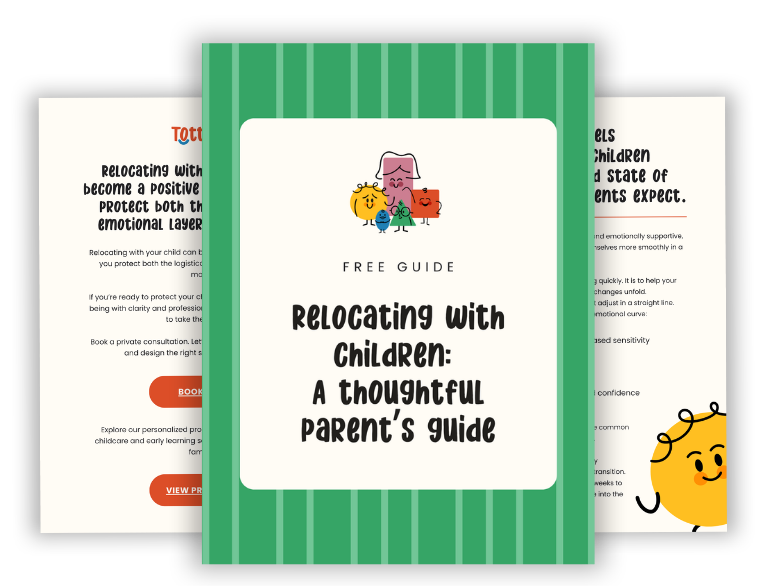
Moving to Mexico or Latin America with children is more than a change of address. It is a major transition that affects every part of your child’s routine, emotions, and sense of safety. While you handle visas, housing, and schools, your child is adjusting to a new language, new places, and a different daily routine at home.
Even if you choose this move and believe it is best for your family, it may not feel easy. You might be leaving your support network, your country, familiar routines, and people who made daily life easier. You can feel both excitement and doubt. Above all, your children are your priority. You want them to feel safe, and you worry about how they will adjust. You may wonder if you are doing enough to support their emotional well-being during this big change.
When you move to Mexico with children, you need support you can trust. Totters Care provides in-home childcare designed for international families in transition. This is more than babysitting. It is structured, emotionally aware care that brings calm and consistency to your home, giving your child something steady when everything else is new.
Imagine a childcare provider who does more than supervise. They plan thoughtful activities, gently support your child through the emotions of relocation, and truly connect with your child’s needs and personality. They understand that moving to a new country takes patience, structure, and sensitivity.
At Totters Care, this is our everyday practice. Our caregivers are present, engaged, and caring. They support your child’s learning, emotional well-being, and daily routine, so your family can settle in with greater clarity and confidence.
What is relocation childcare for families relocating to Mexico and Latin American countries?
Relocation childcare for families moving to Mexico and Latin America is structured, in-home support designed for international transitions. It recognizes that moving affects children emotionally, developmentally, and socially. This care is more than supervision. It brings stability to your home when almost everything else is new.
Our support is designed for children from newborn through 12 years old, adapting to each developmental stage with age-appropriate structure, engagement, and emotional awareness.
Relocating to Mexico and Latin America often means a new language, new routines, new schools, and unfamiliar surroundings. While you manage housing and paperwork, your child misses familiar places and people. Without a steady routine, this adjustment can feel overwhelming.
Totters Care provides reliable, safe, and professional caregivers who support your family in English or Spanish, based on your needs. Whether you want your child to keep their language familiar or support bilingual learning, our care is always clear and intentional.
Support can begin before you arrive. Caregivers may work with your household assistant or relocation team to set up your child’s room, organize familiar items, and make your new home feel welcoming before you get there. They might greet you at the airport or be there on your first day to help your child settle in right away. From the start, your family is not alone.
For many families, relocation is a long-term decision. That is why this support is designed to give you continuity and stability beyond the first weeks. A reliable caregiver becomes part of your home's routine, adding trust and emotional safety so your child feels secure and happy during the transition. Your caregiver is a steady presence that helps your child feel safe while your family builds a new life in Mexico or Latin America.
The most common challenges families face when relocating to Mexico or a Latin American country
Relocating to Mexico or a Latin American country can be exciting and intentional. But if you are going through this transition, you know it also brings pressure.
You may be experiencing:
- Fear of making the wrong childcare decision. You are in a new country where standards feel unfamiliar. You question who to trust and whether a caregiver truly understands your expectations and family values.
- The loss of your support network. You no longer have grandparents nearby, trusted babysitters, or close friends who can step in. The safety net you once relied on is no longer there.
- Pressure to keep everything stable for your children. Even if you feel uncertain yourself, you try to project calm so your children do not absorb the stress of relocation.
- Worry about how this move is affecting your child emotionally. You may notice changes in behavior, sleep, or mood, and quietly wonder if the transition is harder than you expected.
- Overwhelm from managing logistics and parenting at the same time. Housing, documentation, schools, cultural adaptation, and daily responsibilities all demand attention. There is little space left for your own emotional bandwidth.
- Concern about language and cultural adjustment. You may wonder how your child and your family will adapt socially, especially if Spanish becomes part of your daily environment.
- Difficulty creating a routine in a completely new setting. Everything feels unfamiliar. Establishing structure while navigating relocation can feel exhausting.
How do you know your family needs relocation childcare support?
You likely need relocation childcare support if you are a parent who:
- You put your children’s emotional well-being and safety first. Your priority is not just convenience. You want your children to feel secure, supported, and emotionally steady during your move to Mexico or Latin America. You do not want someone who simply supervises. You want a caregiver who is truly present with your child, someone who engages, listens, observes, and responds, not just someone who watches from the side.
- You expect age-appropriate, intentional activities. You want a professional who plans activities that fit your child’s age and stage. Play that encourages learning. Routines that build structure. Experiences that help your child feel confident and adapt.
- You want a professional caregiver who understands relocation and emotional adjustment. You are not looking for casual babysitting. You want someone reliable, safe, and trained in early childhood development who knows how international moves affect children.
- You feel the pressure of managing everything on your own. You are handling housing, paperwork, schools, and cultural adaptation without your usual support network. The responsibility can feel constant.
- You worry about safety and trust in a new country. Relocation makes you more careful. You need vetted, trustworthy support in your home that matches your family’s standards and values.
- You want stability and long-term continuity. You are not looking for short-term help. You want a caregiver who becomes part of your home’s routine and adds trust, emotional safety, and consistency.
If this sounds like you, in-home childcare with Totters Care is more than just support. It provides the structure, stability, and professional presence your family needs during your move to Mexico or Latin America.
What does Totter’s childcare at home include during relocation to Mexico and Latin American countries?
Relocation to Mexico and Latin American countries is not only logistical. It is emotional. Our childcare at home is designed to create stability, structure, and security from the very first day.
Our service includes:
- Pre-arrival preparation and thoughtful transition. Before you arrive, we learn about your child’s routines, interests, comfort objects, and personality. We can coordinate with your household assistant or relocation team to prepare their room intentionally so it feels familiar. When needed, we greet you upon arrival and create a warm, structured beginning.
- Immediate stability and emotional support. From day one, your child has a steady, reliable presence. We provide calm structure, emotional attunement, and intentional routines that support regulation and adaptation.
- Comprehensive care for your children. This includes full supervision and active presence, not passive monitoring. We are engaged, responsive, and developmentally aware at all times.
- Support with daily routines, including meals and hygiene. We assist with your child’s complete daily rhythm. This includes basic meal preparation, serving meals, washing dishes related to the child, supporting hygiene routines, and maintaining consistency around sleep and transitions.
- Child-related household support. We manage tasks connected to your child’s care, including organizing their spaces, washing and folding children’s laundry, placing clothes in the washer or dryer, and maintaining order in their rooms and play areas.
- Planned educational and play-based activities. We design age-appropriate, developmentally aligned activities that stimulate learning, creativity, and emotional growth. This is not simple supervision. It is intentional, present, and structured engagement.
- English or Spanish language continuity. Care is delivered in English or Spanish, depending on your family’s goals. Whether maintaining language familiarity or supporting bilingual exposure, communication remains clear, intentional, and aligned with your expectations.
- Ongoing communication and parental alignment. We maintain clear communication so you feel informed and supported. Routines, observations, and adjustments are shared regularly to ensure alignment with your values.
- Coordinated Totters team oversight. Behind every caregiver is the Totters team. We provide guidance, accountability, and continuous support to ensure professional standards and consistent quality. You are not relying on one individual alone, but on a structured system designed to protect your family’s stability during relocation to Mexico and Latin American countries.
We do not simply provide childcare. We create a structured, emotionally safe environment where your child can adapt with confidence while you focus on building your new chapter.
How are caregivers selected, vetted, and matched to your family’s needs and values during relocation to Mexico and Latin American countries?
When your family is relocating to Mexico and other Latin American countries, inviting someone into your home requires absolute trust. That trust is built through structure, transparency, and rigorous standards. Every caregiver who joins the Totters team undergoes a strict selection process:
- Strong professional background. Our childcare providers have formal backgrounds in education, childcare, psychology, pediatric nursing, or related fields. Many have also worked as au pairs or in international family settings, giving them real experience supporting children in cross-cultural environments.
- Background checks and reference verification. Every caregiver completes a comprehensive background check and reference verification. Safety is non-negotiable.
- In-depth interview process. Our interviews go beyond experience. We assess emotional maturity, reliability, communication skills, and professional judgment. We evaluate how caregivers respond to real-life scenarios, not just how they describe their resumes.
- Validated assessment battery. Each caregiver completes a structured evaluation designed to measure integrity, emotional stability, and professional reliability. This objective assessment allows us to identify patterns and statistically assess risk indicators such as dishonesty, aggression, manipulation, or instability. We do not rely solely on intuition. We rely on data.
- First-aid and emergency certifications: All caregivers are certified in first aid and emergency response, ensuring preparedness in the unexpected.
Matching and after matching are just as intentional as selection.
- Deep discovery video call. We begin with a video call, followed by a detailed questionnaire that helps us learn about your child’s personality, routines, emotional needs, language preferences, and your family’s values. This conversation allows us to understand not only logistics, but temperament and expectations.
- Intentional compatibility selection. Based on your family profile, we identify the caregiver whose experience, energy, communication style, and professional background best align with your child and household dynamics.
- Personal interview and shared decision. We have selected your preferred Totters caregiver and invite you to interview them directly. You have the opportunity to ask questions, explore fit, and ensure comfort before any placement is finalized.
- Structured adaptation period. Once care begins, we implement a defined adaptation phase designed to support your child, your family, and your Totters caregiver. This stage allows routines to settle and emotional rhythms to stabilize gradually. If areas of improvement are identified, we provide additional coaching and guidance to your Totters caregiver to strengthen alignment and performance within your home.
- Rematch option for full confidence. If, after the structured adaptation process, you feel the fit is not right, you may request a rematch. Your family’s trust and your child’s emotional well-being remain the priority.

Hello! I am Montse Armesto
Creative Educator & Pedagogue specialized in Child Neuropsychology, with a diploma in Positive & Gentle Parenting.
Start now with comprehensive full-time childcare coverage with elevated support
Includes:
- 40 hours per week of in-home care
- Fixed weekly schedule based on your family’s needs
- Tailored family-matching process
- Fully vetted and certified childcare Totter
- Childcare Totter certified in first-aid
- Backup support if your childcare Totter becomes sick or needs to be absent
- Active and ongoing support from the Totters team
- Personalized developmental plan with early stimulation and educational, recreational, and play-based activities
- Integrated child-focused care, including basic meal preparation for your child and cleaning of child-related items
Minimum commitment: 6 months (24 weeks)
Preferred family benefit: Special discount available on 12-month commitments (48 weeks)
Pricing
- $2,235 USD per month with a bilingual English-Spanish speaking childcare Totter
- $1,470 USD per month with a Spanish-speaking childcare Totter
*Custom plans are available.
How it works?
Step 1: In depth family assessment and needs mapping
We begin with a detailed consultation to understand your family’s values, routines, expectations, and your child’s emotional and developmental needs.

Step 2: Careful selection and matching with your Totter teacher or caregiver
We hand select and evaluate professionals through interviews, background checks, skill assessments, and emotional competency screening to ensure the right fit for your home.

Step 3: Ongoing support, monitoring, and continuity of your service
Once we begin, we provide continuous guidance, structured follow-ups, backup planning, and ongoing communication to maintain consistency and long-term stability.
Tips and resources for coping with relocation to Mexico and Latin American countries
Relocation to Mexico and Latin American countries requires both emotional preparation and practical adaptation. Beyond structure at home, daily integration matters. These small steps can ease the transition for your entire family:
- Maintain one familiar daily routine. Even if everything else changes, preserve at least one consistent rhythm. Bedtime rituals, morning structure, or family meals create emotional predictability for children during transition.
- Prepare your child before and after arrival. Show pictures of the new home or neighborhood. Let them unpack their own comfort items first. Creating small moments of ownership helps reduce uncertainty.
- Introduce new environments gradually. Avoid overwhelming your child with too many new systems at once. New language, new school, and new social settings can be phased in intentionally.
- Build a structure quickly inside the home. Children adapt faster when a daily rhythm is established early. Predictable meal times, rest periods, and structured play reduce emotional stress during relocation to Mexico and Latin American countries.
- Use WhatsApp for day-to-day communication. In Latin America, WhatsApp is the primary communication tool for activities, building administration, parent groups, and local communities. Becoming comfortable using it early will simplify daily coordination.
- Join a local expat support group. Connecting with other families navigating relocation can reduce isolation and provide practical guidance. For families relocating to Mexico, you can join this support group for Mexican expat families. For families relocating within Latin America, you can join the LATAM expat families support group. These communities can help answer everyday questions, from school recommendations to pediatricians, activities, and daily living tips.
- Stay connected to your original support system. Even from a distance, maintaining regular contact with family and friends can help both you and your child feel grounded during the adjustment period.
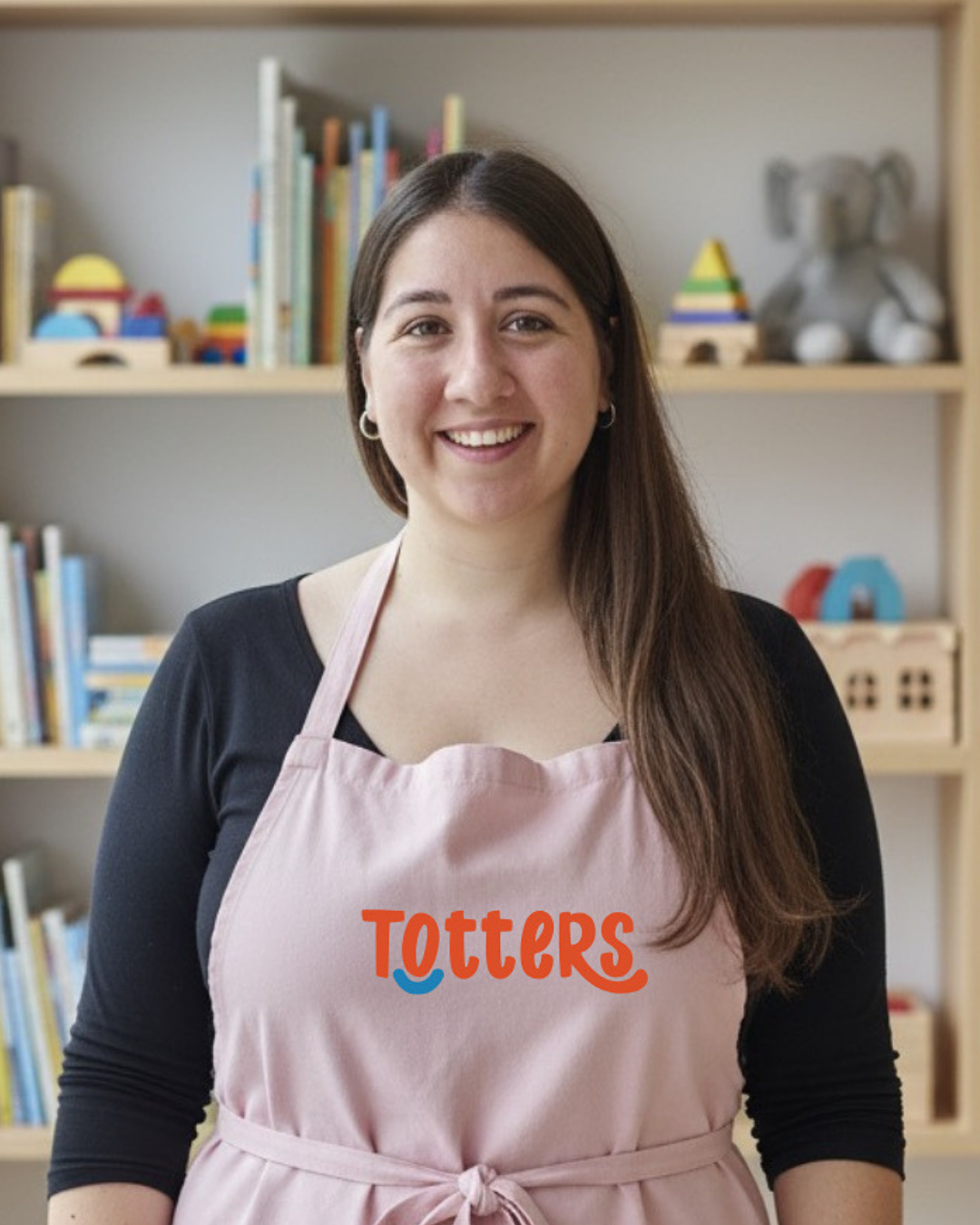
Hello, I’m Montse Armesto, founder of Totters Care. We support families relocating to Mexico and other Latin American countries with professional in-home childcare.
I am a pedagogue and child neuropsychologist with specialized training in positive and gentle parenting. I understand the unique emotional and logistical pressures families face when relocating to Mexico and other Latin American countries, especially when their priority is protecting their children’s well-being while building a new life abroad.
At Totters Care, we provide emotionally attuned, safe, and professional childcare at home, designed specifically for international families in transition. Our focus is to create stability, structure, and emotional security for your children so your family can settle into this new chapter with confidence from the very beginning.
FAQ about relocation to Mexico and Latin American countries with children
Is Mexico a good place to raise children?
Many families relocating to Mexico and Latin American countries report strong community culture, family-centered environments, and access to bilingual education. Like any country, the experience depends on the city, neighborhood, and level of preparation. With intentional planning and structured support at home, children can adapt successfully and thrive.
What are the best countries in Latin America to raise children?
Countries frequently chosen by international families include Mexico, Costa Rica, Panama, and parts of Colombia and Argentina, depending on lifestyle preferences. Families typically prioritize safety, healthcare access, education quality, and community integration when relocating to Mexico and Latin American countries. The best country ultimately depends on your family’s long-term goals and desired environment.
Is childcare in Mexico reliable for expat families?
Childcare in Mexico varies significantly depending on whether families hire independently or work with a structured agency. For families relocating to Mexico and Latin American countries with children, professional screening, background checks, and intentional matching are essential. Structured childcare at home provides greater stability during transition compared to casual babysitting arrangements.
What are the safest places in Mexico for families relocating with children?
Safety varies by region. Cities such as Mérida, Querétaro, parts of Mexico City, San Miguel de Allende, and certain coastal communities are frequently chosen by international families. When relocating to Mexico and Latin American countries, researching neighborhood-level safety and building local support networks is essential.
What should I prioritize before relocating to Mexico and Latin American countries with children?
Key priorities include securing safe housing, understanding residency requirements, researching schooling options, establishing healthcare access, and arranging reliable childcare support. Addressing these pillars early creates stability during relocation to Mexico and Latin American countries.