




Childcare for Expats in Mexico: What every relocating family should know

Montse Armesto • June 10, 2026

Moving to a new country is one of the most significant decisions a family can make. The excitement of a fresh start, a new culture, and a different pace of life is real. But so is the weight of it. New routines, new systems, a new language on every street sign, and somewhere in the middle of all of that, the very real and very pressing question: who is going to care for my children while I figure the rest of this out?

For expats in Mexico, childcare is rarely a simple checkbox on a relocation list. It is one of the most emotionally charged decisions of the entire move. Parents want what they have always wanted: someone kind, capable, and trustworthy in their home. Someone who understands children, understands transitions, and can offer the kind of steady, warm presence that helps kids feel safe when everything else feels new.

I am Montse Armesto, founder of Totters Care. I built this service specifically for international families navigating this transition because I have seen firsthand how much the right childcare support can change the entire relocation experience. Explore our in-home childcare services for expat families.

Is Mexico a good place to raise children as an expat?

The short answer is yes, and many expat families who have made the move say it has been one of the best decisions of their lives. Mexico offers a rich cultural environment, a slower pace in many cities, strong community values, and a warmth toward children that is genuinely woven into daily life. But like any country, the experience depends enormously on where you settle and how prepared you are.

What are the safest cities in Mexico for expat families with kids?

Safety is the first question most families ask, and it deserves a direct answer. The cities where expat families tend to thrive — and where Totters Care operates — are generally considered among the safest and most livable in the country. Mexico City, particularly neighborhoods like Polanco, Condesa, Roma, and Santa Fe, has a large, established expat community and a wide range of family services. Querétaro is consistently ranked among Mexico's safest cities and has seen significant expat growth in recent years. Mérida, in the Yucatán, is widely regarded as one of the safest cities in all of Latin America and is especially popular with families for its quality of life.

How do expat children typically adjust to life in Mexico?

Children are remarkably adaptable, but they need the right conditions to thrive during a transition. Research consistently shows that children adjust better when their immediate environment — their home, their routines, and their caregivers — remains stable even when the larger world around them is changing. Children who have a consistent caregiver, a predictable daily rhythm, and adults who validate their feelings tend to settle into a new country far more smoothly than those navigating change without that anchor.

What does childcare really look like for expat families in Mexico?

Childcare in Mexico is not a monolithic system. It varies enormously by city, neighborhood, socioeconomic context, and the type of care you are looking for. For expat families arriving with expectations shaped by North American or European standards, the adjustment requires some recalibration — not because care is worse, but because the system works differently.

Is the standard of childcare in Mexico comparable to what expat families are used to?

The honest answer is: it depends entirely on who you hire and how you find them. Mexico has deeply caring, experienced, and professionally trained childcare providers. It also has an informal sector where standards are inconsistent and vetting is minimal. The difference between a positive experience and a stressful one often comes down to whether families know what questions to ask and where to look.

Formal childcare agencies and professional services that specialize in expat families tend to offer higher consistency in training, background screening, and communication. The challenge is that these services are not always easy to find through a Google search, especially for families who have just arrived and are still learning the local landscape.

What are the most common childcare challenges expat parents face?

The most consistent challenges we hear from families are trust, communication, and cultural fit. Parents want to feel confident that the person caring for their child understands their values, routines, and emotional needs. When there is a language gap or cultural unfamiliarity on either side, that confidence takes longer to build.

There is also the challenge of not having a local network. Back home, most parents find childcare through referrals, word of mouth, and community groups. In a new country, that network does not exist yet. Families often feel like they are starting from zero, making decisions quickly under pressure without the usual support system behind them.

Why choosing professional in-home care for your child matters

Safe, stable, and nurturing relationships can act as a powerful protective buffer against the biological harms of toxic stress on children, according to the American Academy of Pediatrics (AAP). Professional caregivers help provide that consistency through dependable routines, emotional support, and positive daily interactions that encourage healthy growth and development.

Choosing professional in-home care also gives you peace of mind. Knowing your child is being cared for by trained and compassionate professionals can help reduce stress and allow you to focus on work, family responsibilities, and quality time together. With the right support, your child can continue to thrive emotionally, socially, and physically in the comfort of home.

How do language and culture affect childcare quality for international families?

Language is both a practical and an emotional factor. For young children, being cared for by someone who speaks their language can be deeply reassuring, especially during the initial adjustment period. For expat families who want their children to develop Spanish, a bilingual caregiver can be a genuine asset. The key is intentionality — the best childcare arrangements are those in which language expectations are discussed openly from the start.

What should expat parents look for when hiring a nanny or caregiver in Mexico?

The fundamentals are the same everywhere: verified references, a background check, relevant experience with children of similar ages, and clear communication. What matters additionally for expat families is cultural and linguistic fit, familiarity with the specific emotional needs of children going through relocation, and ideally, some experience working with international families. A caregiver who has only ever worked in traditional Mexican household contexts may not be prepared for the particular dynamics of a family that arrived three weeks ago, is still unpacking, and has a child who is quietly struggling with the move.

What questions should you ask before bringing a caregiver into your home?

The most important questions go beyond experience and references. Ask how the caregiver handles a child who is upset or resistant. Ask how they approach transitions in a child's day. Ask what they would do if a child in their care seemed withdrawn or emotionally dysregulated. These questions reveal whether a caregiver has emotional intelligence and awareness of child development — or is simply used to managing logistics. For expat families, emotional attunement in a caregiver is not a luxury. It is a necessity.

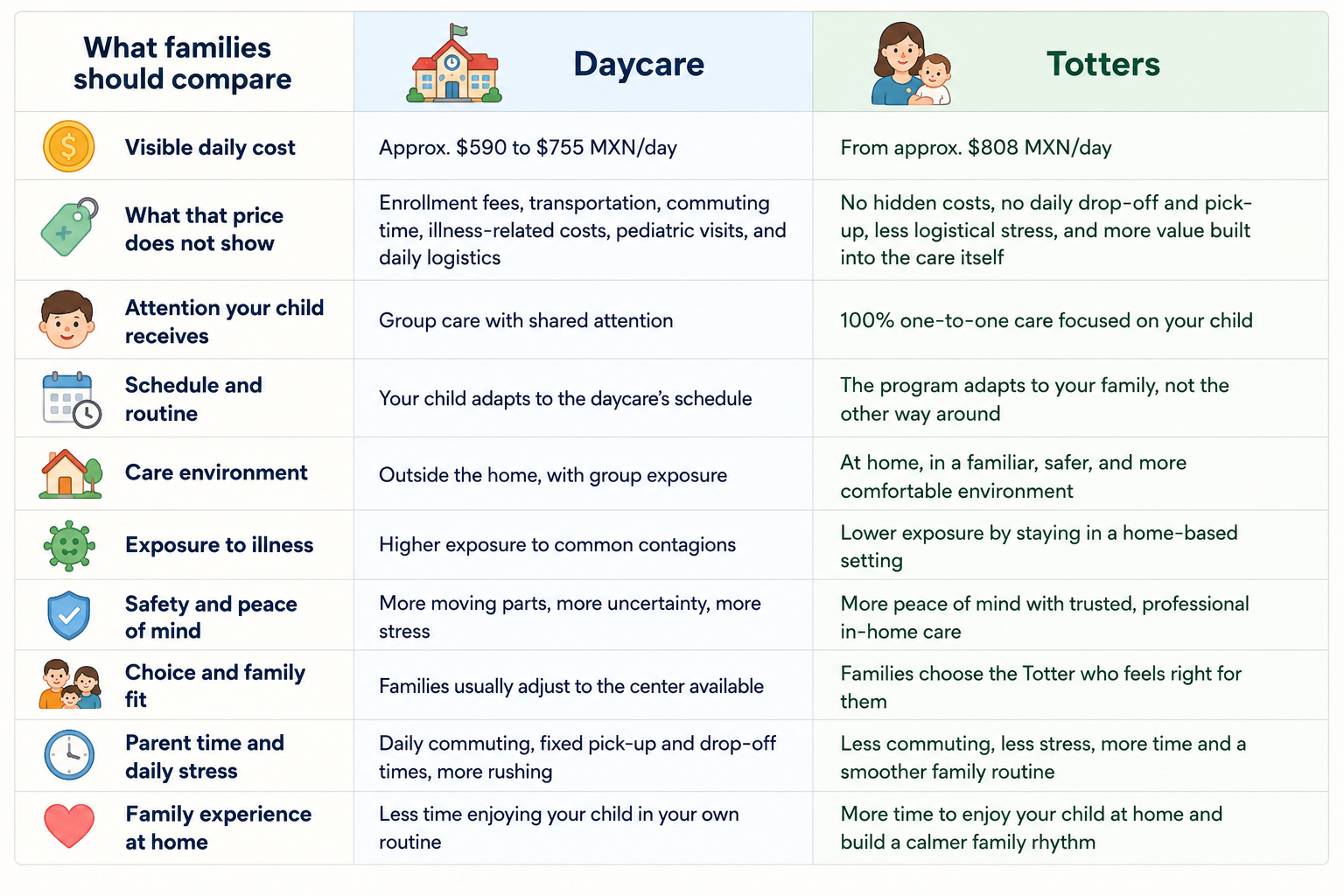
How is in-home childcare different from daycare or childcare centers in Mexico?

In-home childcare offers something that no center-based model can fully replicate: consistency, one-on-one attention, and the comfort of a familiar space. For children who are already navigating the disorientation of a new country, being cared for in their own home by someone who knows their preferences, their rhythms, and their name matters enormously. Centers can be excellent environments for socialization and structured learning, but during the initial relocation period, in-home care tends to support children's emotional adjustment more effectively.

Childcare price: Why in-home professional childcare is a better investment

nanny price mexico city

You do not have to figure this out alone

Relocating to Mexico with children is a big undertaking. There are a hundred things on your list, and childcare deserves to be at the top of it — not because it is the most logistically complex, but because it affects everything else. When your children feel safe and supported, when there is a calm, trusted presence in your home, the rest of the transition gets easier. Not perfect. But easier.

Totters Care exists to be that presence for your family. Whether you are arriving next month or still in the planning stages, we are here to help you find the right care before the stress of settling in takes over. Explore our in-home nanny service with a pedagogical and neurodevelopmental focus for expat families in Mexico, and take one thing off your list today.

Childcare for expats in Mexico

Hello I ´m Montse Armesto

Pedagogue & Child Development Specialist, focused on Child Neuropsychology and Neurodevelopment. Certified in Positive & Gentle Parenting.


At Totters, we believe childcare can be so much more than supervision. By combining child development science and evidence-based early childhood practices, we create enriching in-home experiences that support children’s learning, confidence, curiosity, and overall development.

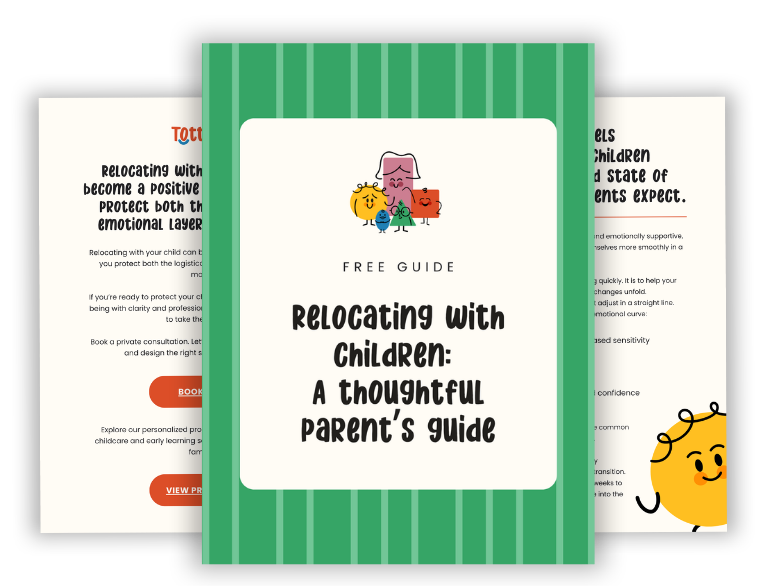
Download my free guide

moving to merida, mexico
By Montse Armesto June 10, 2026
Thinking about moving to Mérida, Mexico with your family? Here's an honest guide covering safety, cost of living, neighborhoods, climate, and childcare.
moving to Mexico City
June 10, 2026
Moving to Mexico City with kids? Neighborhoods, schools, safety tips, and what daily life really looks like for expat families in CDMX.
Moving to Mexico from the US
June 10, 2026
Planning on moving to Mexico from the US with kids? Visas, costs, safety, childcare, and real expat resources. Everything your family needs to know.

Disclaimer:

All advice is not legal advice and consult with your local entities for accurate data the blog is for informational purposes only

Some of the links on this page may be affiliate links, though not all of them are. This means we may earn a small commission if you use certain links, at no extra cost to you. We only include services or resources we believe may be useful, but you should always compare options and choose what works best for your situation.