

How to build a child’s confidence through everyday interactions
Parents often describe confidence as one of the qualities they hope their children will develop as they grow. Confidence influences how children approach new situations, interact with others, respond to challenges, and engage in learning.
Research in child development suggests that confidence develops gradually through experience. Children build confidence when they have opportunities to participate, practice skills, solve problems, and form secure relationships with the adults around them.
These experiences occur during ordinary moments throughout the day. Daily routines, conversations, play, and family responsibilities all contribute to how children understand their own abilities.
Before we continue, I’d like to introduce myself. My name is Montse Armesto, and I am a pedagogue and specialist in child neurodevelopment. I founded Totters with the belief that childcare can be both nurturing and developmentally informed. Throughout my work with children and families, I have seen how everyday interactions shape learning, emotional well-being, and long-term development. That perspective continues to guide how we approach
childcare at Totters, where our goal is to provide families with thoughtful, professional support grounded in child and neurodevelopment and a genuine respect for childhood.
Confidence develops through repeated experiences of competence
Children develop confidence through experiences that allow them to connect effort, practice, and progress.
When a child learns to zip a jacket, pour a glass of water, carry a backpack, or complete a task independently, they gather information about their own capabilities. Over time, these experiences influence how they approach new challenges.
Researchers often describe this process through the concept of self-efficacy, which refers to a person’s belief in their ability to influence outcomes through their actions.
For young children, self-efficacy develops through participation.
A child who regularly hears “let me do it for you” has fewer opportunities to discover what they can do independently. A child who is encouraged to participate gains repeated opportunities to practice, make adjustments, and improve.
This does not mean expecting children to perform tasks beyond their developmental stage. It means identifying opportunities where they can contribute meaningfully.
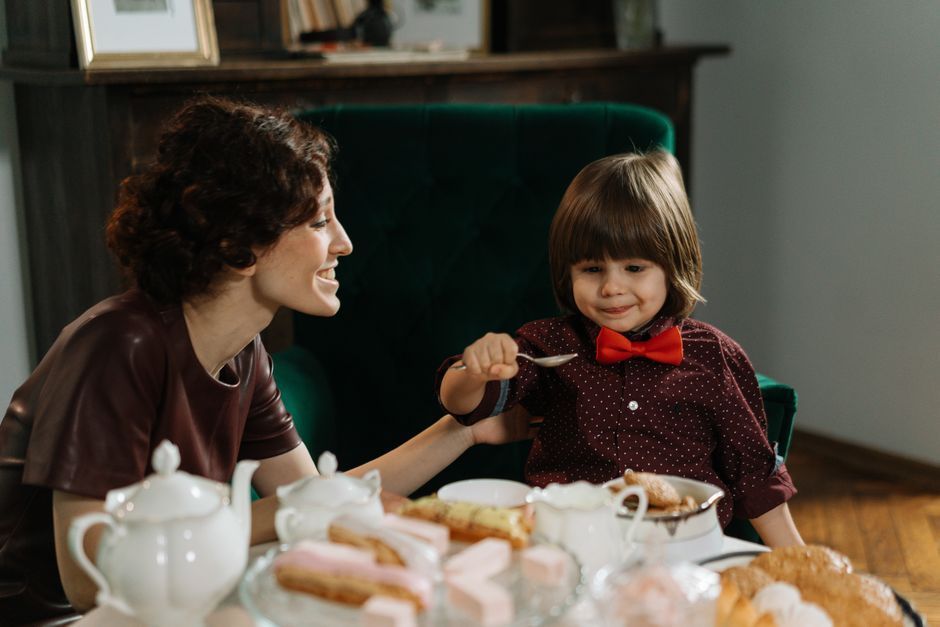
At Totters, caregivers are trained to recognize these opportunities throughout the day. A child may help prepare a snack, organize materials after an activity, put on their own shoes, or assist with simple household routines. These experiences support skill development while also strengthening confidence.
Responses to mistakes influence how children interpret challenges
Children pay close attention to what happens after mistakes. A spilled drink, an unfinished puzzle, an incorrect answer, or a failed attempt at a new skill provides information beyond the immediate outcome. These moments influence how children think about effort, learning, and future challenges.
When mistakes consistently lead to criticism or frustration, children may become more hesitant to attempt unfamiliar tasks. When mistakes are treated as a normal part of learning, children are more likely to remain engaged and continue practicing.
Adults can support this process by responding calmly and focusing on problem-solving. Simple questions are often effective:
- “What happened?”
- “Would you like to try again?”
- “What could we do differently next time?”
These responses encourage reflection without attaching shame to the mistake.
At Totters, caregivers use this approach during play, daily routines, and learning activities. Children are encouraged to work through challenges with support that matches their developmental needs. The goal is to help children remain engaged long enough to develop new skills and strategies.
The language adults use shapes how children think about effort
Feedback influences how children interpret success and progress.
Research suggests that children benefit when adults acknowledge effort, persistence, strategy, and problem-solving.
For example:
- “You spent a lot of time working on that.”
- “I noticed you tried several different ways to solve that problem.”
- “You kept going even when it became difficult.”
These observations draw attention to the process that led to improvement.
Children benefit from understanding that learning often involves practice, repetition, and adjustment. This perspective can support persistence when they encounter challenges in school, sports, relationships, and everyday life.
At Totters, caregivers focus on descriptive feedback that helps children recognize their own efforts and decisions. This approach encourages children to pay attention to how they learn rather than relying exclusively on external approval.
Responsibility contributes to confidence
Many children show a strong interest in contributing to the world around them.
They want to help prepare meals, organize toys, care for pets, carry materials, and participate in family routines.
These activities provide opportunities to practice planning, coordination, decision-making, and responsibility.
They also provide visible evidence of competence.
A child who helps set the table can see the completed task. A child who waters plants can observe the results of their actions over time. A child who helps care for shared spaces experiences the satisfaction of contributing to a group effort.
Responsibility helps children develop a sense of capability because they can see the direct impact of their participation.
For this reason, Totters incorporates age-appropriate responsibilities into everyday care. Participation is viewed as part of development rather than as an optional activity.
Attention and responsiveness support a child’s sense of agency
Children form expectations about themselves through interactions with adults.
When a child speaks and receives a thoughtful response, they learn that communication has value.
When a child asks a question and is encouraged to think through possible answers, they learn that their ideas deserve consideration.
When a child expresses frustration and an adult helps them identify and manage emotions, they gain tools that can be applied in future situations.
These interactions contribute to a child’s sense of agency, which refers to the understanding that their thoughts, actions, and choices can influence what happens around them.
Agency plays an important role in confidence because it affects how children approach challenges and relationships.Small moments matter.
- Listening attentively when a child tells a story.
- Pausing to answer a question.
- Allowing a child to make age-appropriate choices.
- Inviting a child to participate in decision-making.
These experiences help children understand that their contributions have meaning.
Secure relationships create conditions for confidence to develop
Research across developmental psychology and attachment theory highlights the importance of stable, responsive relationships during childhood.
Children are more likely to explore unfamiliar situations when they feel emotionally secure with the adults around them.
They are more willing to attempt difficult tasks, engage with peers, and recover from setbacks when support is available if needed.
Confidence develops most effectively in environments where children experience consistency, responsiveness, and trust.
At Totters, relationship-building is a central component of care. Caregivers prioritize responsive interactions, predictable routines, and meaningful engagement because these elements support development across social, emotional, and cognitive domains.
Strong relationships provide a foundation from which children can explore, learn, and practice new skills.
Everyday interactions have a cumulative effect
Confidence develops over time.
A single conversation does not determine how a child views themselves. A single success or setback does not define their future.
Children build confidence through repeated experiences that allow them to participate, contribute, solve problems, and develop skills.
Parents can support this process through everyday practices:
- Allow children to complete tasks they are capable of attempting.
- Encourage participation in family routines.
- Respond to mistakes with patience and problem-solving.
- Acknowledge effort, persistence, and strategy.
- Listen attentively when children communicate thoughts and feelings.
- Maintain consistent and responsive relationships.
These practices help children develop an accurate understanding of their abilities and a willingness to engage with new challenges. Confidence grows through experience. Everyday interactions provide many opportunities to support that process.
Supporting confidence through intentional care
Families often invest significant time and energy in creating opportunities for their children to learn and thrive. The quality of a child’s daily interactions plays an important role in that process.
At Totters, our caregivers combine professional childcare with a foundation in child development and neurodevelopment. Through responsive relationships, age-appropriate independence, meaningful engagement, and individualized care, we help create environments where children can build skills, develop confidence, and grow with the support they need.
If you’re looking for professional in-home childcare that aligns with your family’s values and supports your child’s development, we’d love to connect.
Learn more about Totters and discover how our professional in-home nannies in Mexico & Latam help children grow through thoughtful, developmentally informed care.
The body content of your post goes here. To edit this text, click on it and delete this default text and start typing your own or paste your own from a different source.

Hello I ´m Montse Armesto
Pedagogue & Child Development Specialist, focused on Child Neuropsychology and Neurodevelopment. Certified in Positive & Gentle Parenting.
At Totters, we believe childcare can be so much more than supervision. By combining child development science and evidence-based early childhood practices, we create enriching in-home experiences that support children’s learning, confidence, curiosity, and overall development.
Download my free guide





Disclaimer:
All advice is not legal advice and consult with your local entities for accurate data the blog is for informational purposes only
Some of the links on this page may be affiliate links, though not all of them are. This means we may earn a small commission if you use certain links, at no extra cost to you. We only include services or resources we believe may be useful, but you should always compare options and choose what works best for your situation.