Moving to Mexico from the US: What every international family should know before they go
Moving to Mexico from the US is one of those decisions that lives in your body before it lives on paper. You've done the research, maybe you've visited, maybe your partner's job made the choice for you, but somewhere between the excitement and the logistics, a quiet question starts to surface: what about the kids? What happens to their routines, their sense of safety, their ability to just feel okay in a new place? If you're asking that question, you're already thinking about this the right way.
Relocating internationally with children is not just a logistical event. It's an emotional one. And the families who navigate it best are the ones who prepare not only their documents and their shipping containers, but their home environment, the rhythms, the support, and the care that will help their children land softly in a new country. This guide was written specifically for you: the parent who wants to do this right.
I'm Montse Armesto, founder of Totters Care, and I support international families relocating to Mexico and Latin America with professional, in-home childcare and early learning. If you want to understand what we do and how we can support your family during this transition, you're welcome to explore our in-home childcare services. And if this move involves children, I'd especially encourage you to visit our relocation childcare specialization — it was built for exactly this season of life.
How hard is it for an American to move to Mexico?
Honestly? It's more manageable than most people expect, and more layered than the internet makes it look. Moving to Mexico from the US is entirely achievable, especially for families who give themselves enough lead time to sort through the paperwork, the logistics, and the emotional preparation. The process is not fast, but it is navigable. What makes it feel hard is usually the combination of too many moving pieces happening at once without a clear order of operations.
The legal side, the housing search, the school enrollment, the childcare question, the banking situation — these all exist at the same time. And they all feel urgent. The key is understanding which decisions need to happen first and which ones can wait. Visa status is always the first domino.
Can a U.S. citizen move to Mexico permanently?
Yes, absolutely. U.S. citizens can apply for permanent residency in Mexico through the Residente Permanente visa. This pathway is available to people who meet certain income or asset thresholds, have close family ties to Mexican nationals, or have held temporary residency for four consecutive years. The financial thresholds are updated periodically by the Mexican government, so it's worth checking the current requirements with the Mexican consulate closest to you before you apply.
Permanent residency gives you the right to live and work in Mexico indefinitely without renewing your status annually. For families planning a long-term move, it's often the most stable and practical route once you've settled in.
How long can an American stay in Mexico without a visa?
U.S. citizens can enter Mexico as tourists and stay for up to 180 days under the FMM tourist permit, which is issued at the port of entry. This is not a visa — it's a temporary admission that allows you to be present in the country but does not allow you to work or establish legal residency. Many families use their first FMM period to scout cities, settle into temporary housing, and begin their residency application from within Mexico.
What most people don't realize is that the 180 days is a maximum, not a guarantee. Immigration officers have discretion over how many days they grant you, and being vague about your intentions can result in a shorter stamp. Being clear and prepared helps. And overstaying your FMM, even unintentionally, creates complications you do not want to navigate during an already full relocation season.
How to move to Mexico from the US: a step-by-step overview
There is no single right order for every family, but there is a general sequence that makes the process feel significantly more manageable. Moving to Mexico from the US works best when you treat it as a staged transition rather than a single event.
What documents do you need to move to Mexico from the US?
At minimum, you will need valid passports for every family member, ideally with more than six months of validity remaining. For children, birth certificates with apostille certification are frequently required for school enrollment, visa applications, and healthcare registration. If you have children from a previous relationship or are traveling with a child who has a different last name, carrying a notarized letter of permission from the other parent is strongly recommended and sometimes required at the border.
Additional documents that come up repeatedly for relocating families include marriage certificates (apostilled), proof of income or financial solvency, vaccination records, and school records for children who will be enrolling in local or international schools. Getting all of these apostilled before you leave the US saves you an enormous amount of back-and-forth once you're already on the ground.
Do you need to speak Spanish to move to Mexico?
Not to get started, no. Many of the cities where international families relocate — Mexico City, Querétaro, Mérida, San Miguel de Allende, Puerto Vallarta — have well-established expat communities, bilingual service providers, and international schools where English is the primary language of instruction. That said, even a basic foundation in Spanish makes daily life significantly easier and helps your children feel more connected to where they are.
Moving to Mexico from the US checklist
What should you do before you leave the US?
- Renew all passports with at least 12 months of validity remaining
- Obtain apostilled copies of birth certificates for every family member
- Apostille your marriage certificate if applicable
- Collect complete medical, dental, and vaccination records for all children
- Gather school transcripts and developmental assessments for each child
- Prepare a notarized travel permission letter if a child has a different last name or is traveling without both parents
- Notify your bank and set up an account that works internationally with low foreign transaction fees
- Inform the IRS of your change of address and understand your filing obligations as a US citizen abroad
- Set up a US mail forwarding service
- Review and update your health insurance to confirm international coverage
- Make decisions about storage or shipping of your belongings and get multiple quotes
- Research and shortlist schools or early learning programs in your destination city
- Begin researching trusted childcare options before you arrive
Upon arrival in Mexico
- Keep your FMM tourist permit safe — you will need it when you exit or transition to residency
- Open a Mexican bank account as early as possible (BBVA and Santander are commonly used by expats)
- Register with your country's embassy or consulate in Mexico
- Begin your residency visa application process before your FMM expires
- Secure your CURP (Clave Única de Registro de Población) — you will need it for school enrollment, healthcare, and many official processes
- Enroll children in school or arrange an in-home early learning program
- Set up a trusted childcare arrangement so your children have a consistent, familiar adult presence from the start
- Establish a consistent daily routine for your children within the first two weeks
- Find a local pediatrician and dentist before you need one urgently
- Connect with local expat communities in your city
What most families forget to plan for
- Childcare: finding someone you genuinely trust takes longer than expected in a new country — start before you arrive
- International school enrollment fees: beyond tuition, budget for uniforms, materials, registration deposits, and often a full semester paid upfront
- Home setup costs: even furnished rentals require purchases — kitchen supplies, linens, children's items
- Shipping overages: international shipping almost always comes in higher than the initial quote
- Legal and immigration fees: working with a Mexican immigration attorney is worth every peso
- The emotional cost of the transition: your children will need more from you in the first 60 days than usual — plan your schedule and support accordingly
Is it safe to move to Mexico as an American family?
Yes, moving to Mexico can be safe for an American family, but it requires the right lens. A more honest way to think about it — the way many locals would — is: Which city? Which neighborhood? What daily routine? What kind of support system?
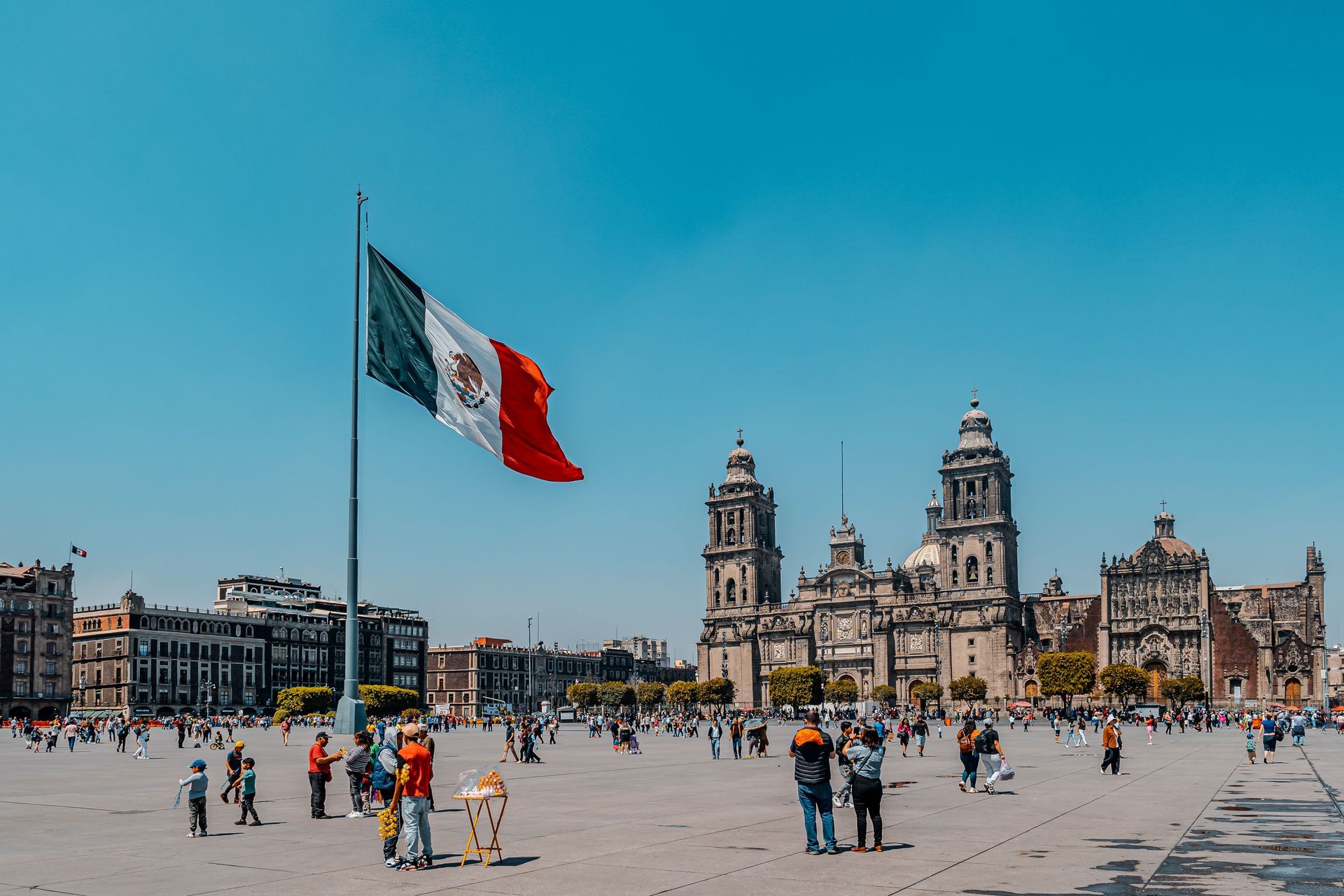
Mexico is a large and very diverse country. Safety can vary dramatically from one state to another, from one city to another, and sometimes even from one neighborhood to the next. There are places where family life is calm, welcoming, social, and very comfortable. There are also places where you would not want to live, drive at night, or move around without good local advice.
For a family, the city and neighborhood matter more than the country as a whole. Living in a well-established, family-friendly area of Mérida, Querétaro, Mexico City, San Miguel de Allende, Guadalajara, Puebla, or Monterrey is very different from choosing a place only because it looks cheap or popular online.
Which cities in Mexico are safest for expat families?
The cities consistently cited by expats for their safety, quality of life, and international community include Mérida, Querétaro, San Miguel de Allende, and parts of Mexico City — particularly neighborhoods like Polanco, Condesa, Roma, San Ángel, Lomas de Chapultepec, and Colonia del Valle. Puerto Vallarta and Playa del Carmen have large expat populations and well-established infrastructure for international families.
How do children typically adjust to an international move?
Adjustment timelines vary by age and temperament, but most children go through a recognizable pattern. The first few weeks often bring heightened alertness — everything is new, and children are absorbing it rapidly. After that initial period, many children enter a harder phase: missing what was familiar, testing limits, expressing their stress through behavior rather than words.
Younger children often show regression: returning to behaviors they had outgrown, like needing a bottle again or having accidents after being potty trained. School-age children may become quieter, more withdrawn, or unusually clingy. These are normal stress responses, not signs that something is wrong. What helps is predictability, physical closeness, honest and age-appropriate communication, and adults who respond with patience rather than alarm.
What kind of childcare and early learning is available in Mexico for expat families?
Options range from local daycares and international preschools to in-home nannies and private early learning programs. For newly arrived families, in-home care is often the most practical and emotionally supportive choice. It keeps children in a familiar environment while they adjust to everything else that is new.
Totters Care offers both a professional childcare program and an early childhood learning program for children. Our in-home services are designed to provide continuity of care for children adjusting to a new country, with caregivers who are trained in early childhood development and specifically selected for their warmth, patience, and ability to support children through change.
What is it actually like to live in Mexico as an expat family?
Healthcare in Mexico for expat families
Mexico has both public and private healthcare systems, and for most expat families, private healthcare is the practical route. The quality of private medical care in major cities is genuinely high. Many physicians trained internationally, hospitals are modern and well-equipped, and costs are a fraction of what the same care would cost in the US. A specialist consultation typically runs between $30 and $80 USD.
International health insurance that covers Mexico is widely available and strongly recommended. Popular options among expats include Cigna Global, Allianz Care, and BUPA International. Many families also purchase local Mexican health insurance through providers like GNP or AXA once they have residency.
Education options for expat children in Mexico
Mexico has a wide range of schooling options for expat children, from fully bilingual private schools to international schools following American, British, or IB curricula. In major expat cities, you will find schools that are accustomed to welcoming children mid-year from abroad and have support structures for language transition. Tuition at international schools ranges significantly, from around $5,000 to $25,000 USD per year depending on the school and city.
For younger children ages one through six, in-home early learning is often a preferred alternative or complement to formal school enrollment, particularly during the first year. It gives children language support, developmental continuity, and emotional stability in a setting that feels safe and familiar while they adjust.
Banking, taxes, and money matters for Americans in Mexico
Opening a Mexican bank account usually requires your passport, proof of address in Mexico, and often your CURP or RFC. BBVA Bancomer and Santander are among the most commonly used banks by expats. For moving money between U.S. and Mexican accounts, Wise is widely used because of its relatively transparent exchange rates and low fees. Paysend and TapTap Send are also worth considering for smaller or more frequent transfers.
U.S. citizens living abroad remain obligated to file U.S. federal taxes regardless of where they live. The Foreign Earned Income Exclusion (FEIE) allows you to exclude a significant portion of foreign-earned income from U.S. taxation. The IRS also requires FBAR filing if your foreign accounts exceed $10,000 at any point during the year — a compliance requirement many expats discover late.
Practical resources to help you get started
Expat Families Mexico — WhatsApp community
Expat Families Mexico is a WhatsApp community created specifically for international families living in or relocating to Mexico. Inside the community you will find dedicated groups for relocation, thrifting, mudanza markets, and state-specific groups so you can connect directly with families in your destination city.
Expat Facebook communities in Mexico
Two groups worth joining immediately: Foreigners in Mexico City and Expats in Mexico — a good first stop for any question you have during the early stages of your move.
Free guide: Relocating to Mexico With Children
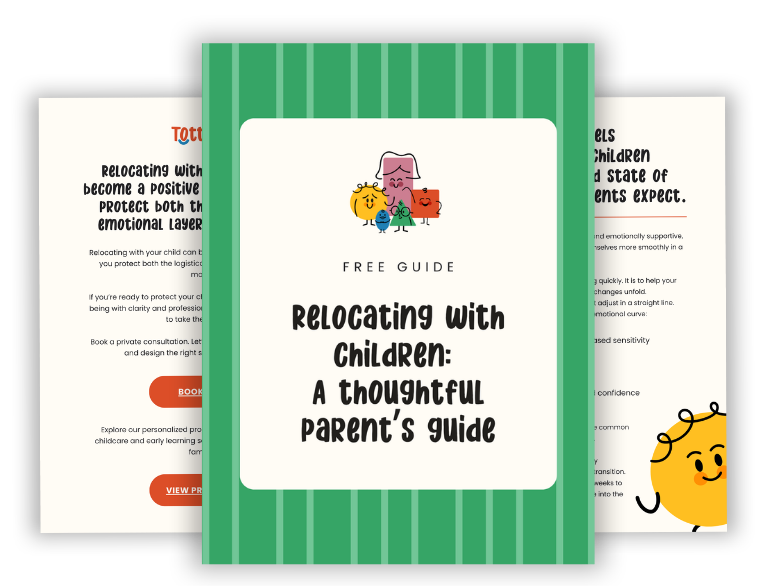
If you're moving to Mexico with kids, this is the resource put together specifically for this transition. It's free, practical, and covers the emotional and logistical ground that most moving guides skip entirely. Download the free guide here.
Ready to make this move feel manageable? Let's talk.
Moving to Mexico from the US with children is a big, beautiful, complicated thing. You don't have to figure out the childcare piece alone. Totters Care was built for this exact moment — when you're relocating, your children need steadiness, and you need someone you can genuinely trust in your home.
Whether you're still in the planning stage or you're arriving in the next few weeks, explore our in-home childcare services or visit our relocation specialization page to learn more. Your children deserve to feel at home wherever life takes them.

Hello I ´m Montse Armesto
Pedagogue & Child Development Specialist, focused on Child Neuropsychology and Neurodevelopment. Certified in Positive & Gentle Parenting.
At Totters, we believe childcare can be so much more than supervision. By combining child development science and evidence-based early childhood practices, we create enriching in-home experiences that support children’s learning, confidence, curiosity, and overall development.
Download my free guide




Disclaimer:
All advice is not legal advice and consult with your local entities for accurate data the blog is for informational purposes only
Some of the links on this page may be affiliate links, though not all of them are. This means we may earn a small commission if you use certain links, at no extra cost to you. We only include services or resources we believe may be useful, but you should always compare options and choose what works best for your situation.